Artist in residence with the City of Navasota, Texas, October 1st, 2015-March 19, 2016.
Candy on the Dancefloor brings the neon and argon light objects together within the gallery space of the Best Museum. Removed from the architectural and social systems they illuminated in earlier installations, the objects are placed directly on the floor and relate primarily to one another. Their only necessary connection is electrical. Together they form a new environment built through light, reflection, orientation, and proximity.
The shift is important. Rather than revealing or responding to existing systems, the installation begins to imagine different possibilities for how objects can exist together. The work proposes that context, relationships, and even systems themselves can be remade. What begins as a formal arrangement of light becomes a small experiment in creating new relational ways of being.
The title comes from the upbeat disco house track “Candy on the Dancefloor.” The song brings the body into the work through the urge to dance and the fleeting joy of the dance floor as a space where different relationships become possible. The light objects are literally the candy on that dance floor, scattered across the gallery and forming a temporary world of their own. The first photograph documents the installation in the gallery. The images that follow are the work translated through the camera, where framing and perspective create new relationships that exist only within the image. 2015


During the residency I participated in Navasota Citizens University, a six-week program designed to introduce residents to the inner workings of city government. Through sessions focused on taxes and city finance, police and fire services, wastewater operations, and community zoning, I learned more about how Navasota functions while building meaningful relationships with residents, city staff, and the mayor.


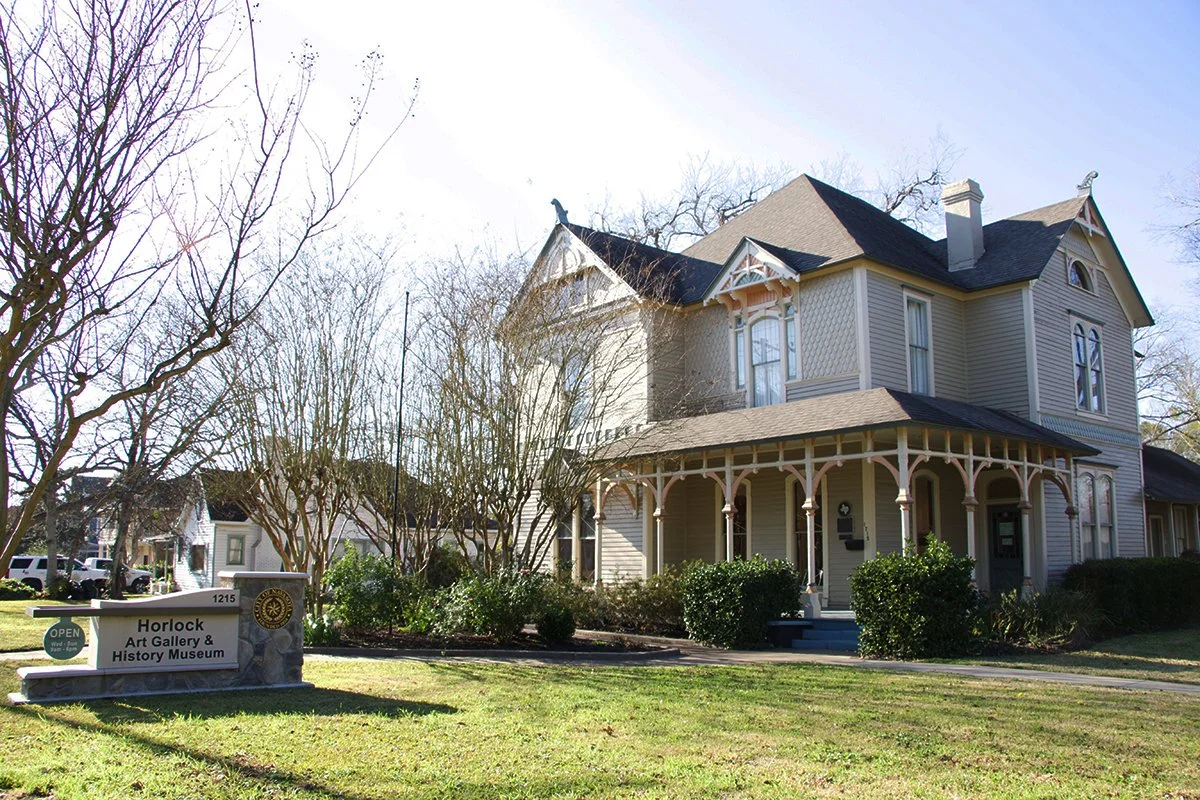
As part of the residency, I welcomed Ms. French’s class to Horlock House for a visit focused on neon and the work I was developing there. Students learned about how neon is made and used in contemporary art while seeing the materials and installations in the space firsthand. The visit became another way of connecting the residency to the local community and sharing the process of making art with young people. (labibliotecafresca.com/creating-artists)


The final installation of the residency brought neon and argon light bars onto the floor and through the architecture of Horlock House. The lights moved in a winding path from room to room, passing through doorways and reflecting in windows as they altered the way the galleries were experienced. By filling and crossing doorways, the bars also complicated access and turned points of passage into temporary barriers. The installation marked a shift away from the earlier curved sign form toward simple neon bars, allowing the light to function less as an individual object and more as a spatial element moving through the architecture. This installation became the formal bridge between the more self-contained arrangements of Candy on the Dancefloor and the larger architectural intervention of Neon Railroad, which followed as a commission from the City of Navasota.


Horlock House Art Gallery & History Museum, site of the residency, Navasota, Texas, 2016